Charlie and the Chocolate Factory is a children’s novel published in 1964 by Roald Dahl. The story is a classic tale of competing candy companies vying for market dominance and the never-ending list of toxic human traits. In the musical version, Wonka finds that his name has been lost to the world of candy as being that old person’s candy, and so to regain his former glory, he launches a global hunt for five golden tickets hidden in his products. We follow the five winners in Veruca Salt, Mike Teavee, Violet Beauregarde, Augustus Gloop, and Charlie Bucket who win the opportunity to tour the titular factory. One will win the grand prize, and the consolation for the others is a lesson well learned.
The most interesting part of the musical version is that you can tie one or more of the seven deadly sins to the children and their parents: the Salts represent envy and greed, the Beauregardes display moments of pride, Augustus is a figure of gluttony and sloth, and Mike Teavee (in the stage version) is a wrathful menace with a screen addiction. The stage version also doesn’t shy away from more mature humour on themes of death, addiction, and poverty—something that I very much enjoyed, as it led to a very well-written show with heavy moments broken by the levity of sarcasm.
General Direction
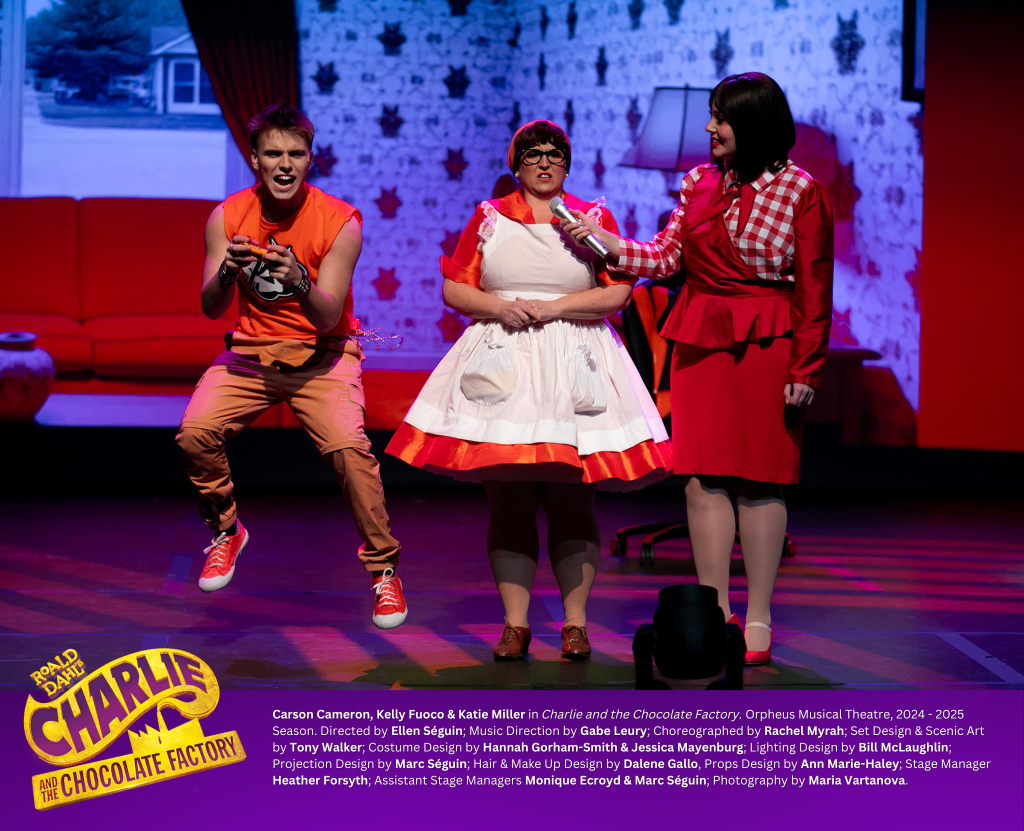
Okay, the character work in this show is so important, as all of these characters are larger than life and everyone hits the mark each time. Mrs. Teavee (Kelly Fuoco) plays an alcoholic midwestern mother hiding her stress and rage behind a cheery facade. The development of this character throughout the show had me in stitches and also was the source of one of my favourite lines in the whole show, “Back in the bag!”. I did want to touch on an artistic choice that I had mixed feelings about. In the song “If Your Father Were Here,” the projection played a video that featured a cameo of J.T. Morris, who plays Charlie’s deceased father. I can see the artistic vision in making a vignette of a life past, but it was so distracting in how almost slapstick it was for such a tender moment. I feel that if the vignette was done live rather than a video, it would’ve had more of an impact and wouldn’t detract from the scene.
Music Direction
Musically, this show is wild in having no true genre to their music. You’ve got yodeling polka music, classic Sousa-esque marching music mixed with early 2000s punk rock, and even folksy Russian. This musical is wild in its choices that enhanced the characters they represented. Each of the songs for the ticket winners fit so perfectly well and were sung also amazing; however, I wish “More of Him to Love” wasn’t the first one we heard because it was so magnificent that it made the songs that followed feel less good, even though they were still remarkable. Augustus Gloop (Karsten Skeries) and Mrs. Gloop (Julie Heath) do an astounding job with my favourite song in the whole show: the humour, the character, and the yodeling had me aghast the whole time. Sadly, this energy wasn’t carried by the ensemble in other numbers. I found a lot of the bigger ensemble numbers lacked energy and weren’t as cohesive in the harmonies.
Choreography
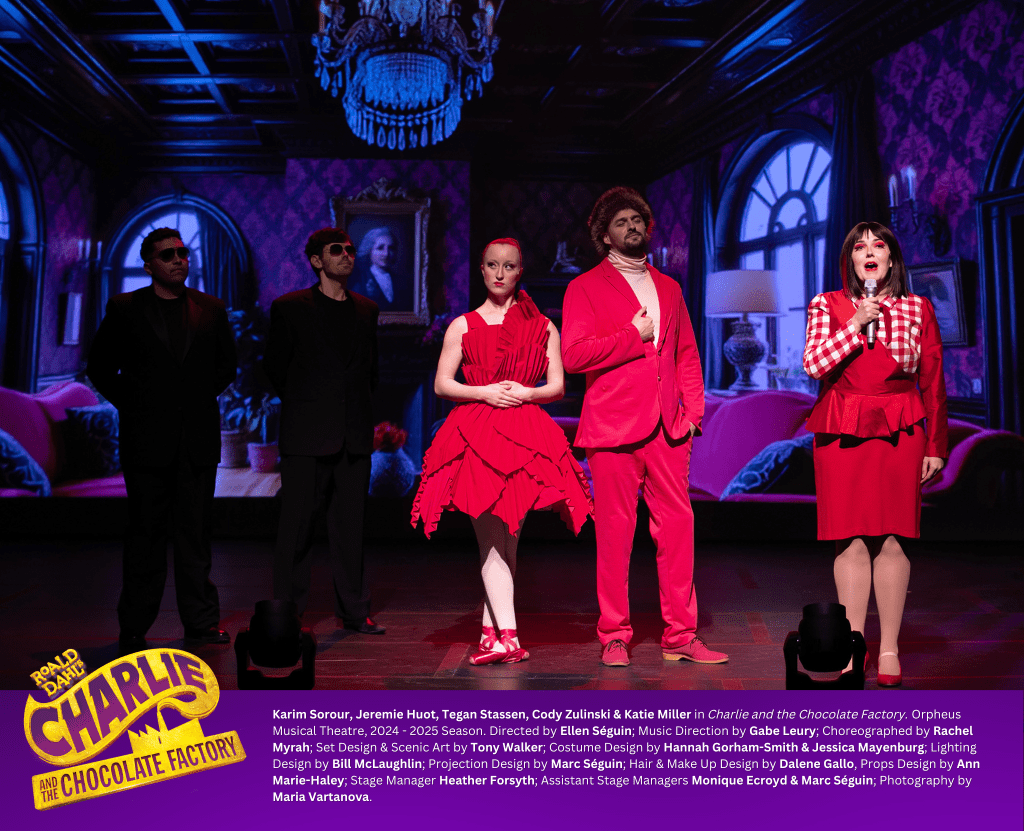
This show isn’t a show that one would expect incredibly complex dance as it’s more focused on the zany characters; however, the moments of dance were quite mixed. Veruca Salt (Tegan Stassen) did a fantastic job in creating the control of ballet with the fiery rage of the spoiled brat that lies beneath. Though Stassen did a fantastic job, it was jarring to see the rest of the choreography struggle to flow smoothly. It felt that a lot of the dances were just there to add movement for the sake of movement instead of adding to the action. Having seen choreographer Rachel Myrah in The Wizard of Oz, I’m not all too surprised at how well the ballet sections were choreographed, as only a trained dancer could’ve choreographed a chaotic ballet with squirrels and made it look beautiful. As her first show as a choreographer with Orpheus, overall a well done job, especially with the bizarre sausage link choreography.
Design
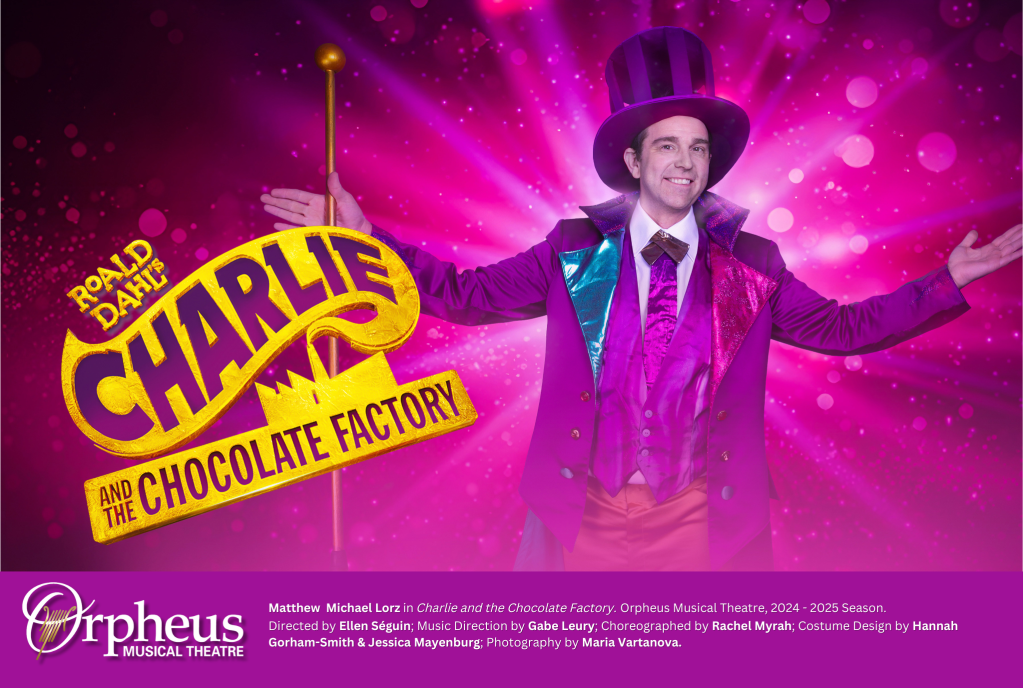
Let’s talk about costumes. Absolutely phenomenal. Orpheus has been having some troubles with consistency when it comes to their costumes, with some being exceptionally well-crafted and then one or two that just miss the mark entirely. This production has that same problem where all the main characters have these amazing designs that suit their characters, but then we have Wonka in a poorly fitted jacket and pants that makes him look like a child dressing up in his father’s clothes. It’s coupled with the fact that they took a very brave decision in creating a new interpretation of the Oompa Loompas. Though the costume for the Oompa Loompas allowed for better expression in movement, it just made them look like a tacky salon stylist and not workers in a factory.
Now that being said, they truly did knock it out of the park for their other main costumes: Mike Teavee, though simple, encapsulates that chaotic gremlin gamer, and Veruca Salt has a beautiful dress that perfectly matches her ballet aesthetic. These two stuck out the most for me, but from Augustus to Violet to Cherry and Jerry, the costumes were clear in idea and execution.

The last Orpheus show I saw was The Wizard of Oz last summer and I was wildly impressed with the set design being very elaborate and expertly crafted with many moving parts, especially with some crazy puppetry. It was one of the best sets I’ve seen Orpheus do, and sadly, that wasn’t the same with this show. The best set piece I saw was for the grandparents, and that was just a simple wooden raised platform with a staircase. For me, the simplicity in its design was brought out by the attention to detail in making it the main focal point for the Bucket’s residence and it exemplified the squalor life they lived. Contrast that to our first inside look of the chocolate factory, where it was just underwhelming. Two static elements, with “Pure Imagination” being the song of discovery for this world of wonderment, were a letdown when you saw the actors struggling to find the wonder in a wasteland.
I think the biggest reason why the set designs were such a disappointment was the overuse of projections. A projection on a giant backdrop can do wonders in setting, but relying on it to create whimsy and excitement is a decisive flaw. Which also touches on the matter of the art projected. Being a community theatre company that prides itself on the work it produces by being the product of countless hours of hard work and dedication of volunteers, it is an absolute gut punch seeing AI art. AI art is an enemy of artists alike, from voice artists to visual artists to musicians: AI is stealing their work and stealing jobs from these artists.
Standouts
Standout performances all round. This show really brought out some of the best character work I’ve seen. I do have to say I have some favourites, though. Karsten Skeries as Augustus Gloop and Julie Heath as his mother absolutely nailed their introduction and set the tone for the cavalcade of comedies to come. Kelly Fuoco as Mrs. Teavee toed that line of sweet Midwestern mother and functional alcoholic with such grace and hilarity, I truly felt the plight of a loving mother to a disturbed child. I also have to give a huge shoutout to Sam Castro as Charlie Bucket. In his second appearance with Orpheus and this time as the titular character, what spectacular work was done for someone of his age, considering it being such a monumental role in terms of how much work there is. I don’t think there is a time where Charlie isn’t onstage, and if there were, it’s for only a hot minute.
Overall, Orpheus has done a fantastic job with this production. I thoroughly enjoyed my night out watching the show and witnessing the absolutely unhinged script executed extremely well by the cast. A definite recommendation in my books to go see if you love some great comedic musical theatre.
 Burnt Out Reviews